
ICON: Edward of Caernarfon
24 February 2026
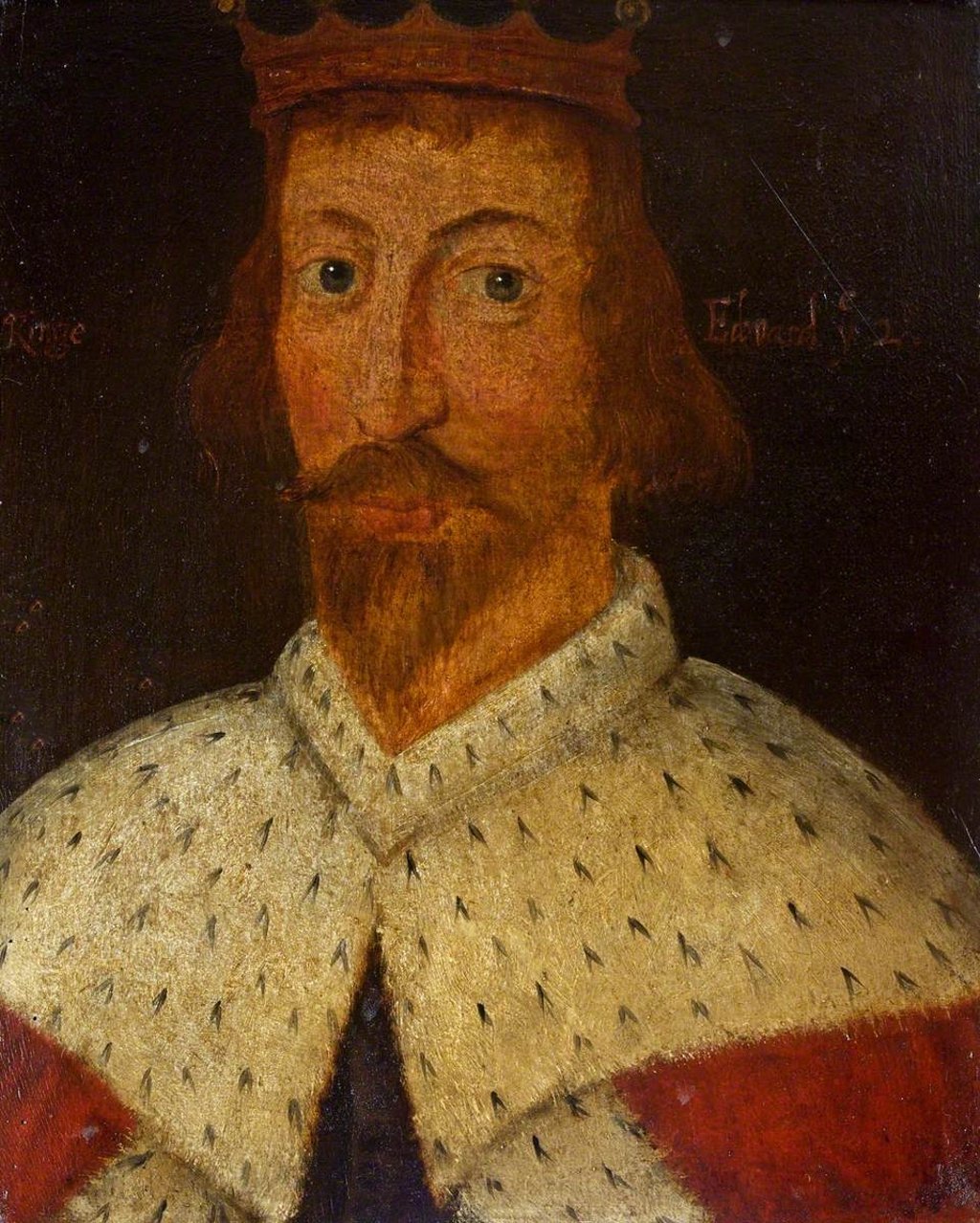
By James D. Wenn
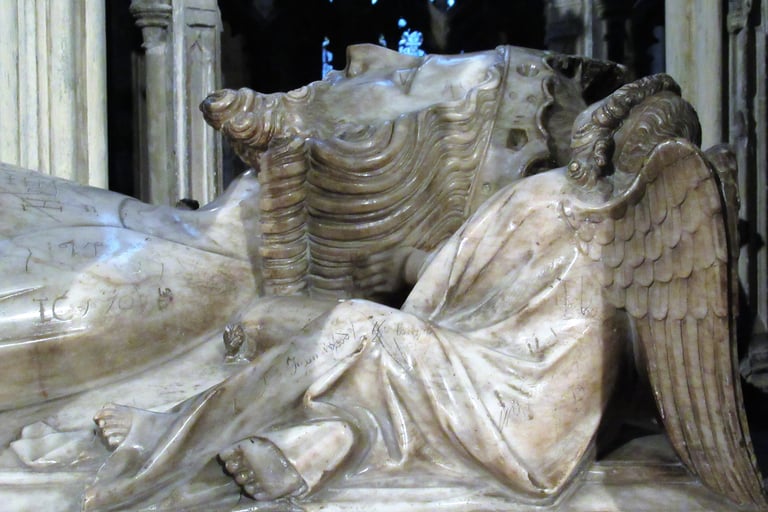
Over twenty years ago, when I was at school at King’s Gloucester, I used to sit in ‘chapel’ (the quire of Gloucester Cathedral) with my back to the tomb of King Edward II, who reigned from 1307 to his deposition in 1327. We studied this king in history lessons as pertinent local history — a royal tomb in a provincial setting is unusual enough to be notable. We learned that Edward was laid to rest at Gloucester because he was murdered at nearby Berkeley Castle (down the Severn river). As Thomas Gray wrote,
‘Mark the year, and mark the night,
When Severn shall re-echo with affright
The shrieks of death, thro' Berkley's roofs that ring,
Shrieks of an agonising King!’
Edward’s tomb became iconic to me for several reasons. The first was rooted in my appreciation of the quire around the tomb. Gloucester Cathedral is ‘fish-tailed’ — its east end splays outwards and is then sealed by a huge stained glass window that we were always told was the largest in the world. It has this shape because only a few radial sections of the galleried apse of Serlo’s eleventh-century building were removed to be replaced by the wall of glass in the fourteenth-century. The remainder of the Romanesque galleries were refaced with gothic tracery in a grid-like manner through which the celebrated native Perpendicular Style was invented for the very first time (we were told… and read… and then argued about with boys of all ages from other cathedrals).
The refacing and remodelling work of the fourteenth century was paid for by the Benedictine monks through donations from Welsh pilgrims. Edward had been born at Caernarfon and made Prince of Wales by his conquering father Edward I, and the Welsh subsequently venerated him in a way that meant his pseudo-Welshness asserted Welsh rights and dignity under Anglo-Norman rule. This tactic is long buried in history, and I never saw adult pilgrims pray through Saint Edward of Caernarfon as a specifically Welsh martyr intercessor when I was a schoolboy, although I myself drew on Edward against a little Marcher-region bullying for having been born in Wales when I was in my first year at school and such things seemed to matter.
However, another kind of pilgrim makes their way to the elaborate tomb. I did occasionally see rainbow-dyed roses and votives of that nature. In 2003 in England a piece of legislation called Section 28 was repealed. This effectively had banned discussion of homosexuality in schools, and mine was possibly the first generation of students at Gloucester to have the liberty to examine the long and complicated historiography around whether Edward’s relations with his favourites (Piers Gaveston, and Hugh Despenser the Younger) was romantic or sexual in nature. Ultimately, despite evidential ambiguity, many people have decided that Edward had same sex love, and concluded that this led to and shaped the manner of his murder, making him a gay martyr in popular mythology and even mysticism.
This was forcefully underpinned in the arts through Derek Jarman’s 1991 film Edward II based on the play by Christopher Marlowe, although it was rather too soon after the repeal of Section 28 for the film to feature in our school studies!
BYRGA GENIHT is the trading name of BYRGA GENIHT LTD,
registered in the UK, company no. 14729339, VAT no. 437140905.
Registered address The Willows, Fell Mill Lane, Honington, Warwickshire CV36 5AD
This website does not use cookies. We never use AI-generated content of any kind or workflow automation.

